
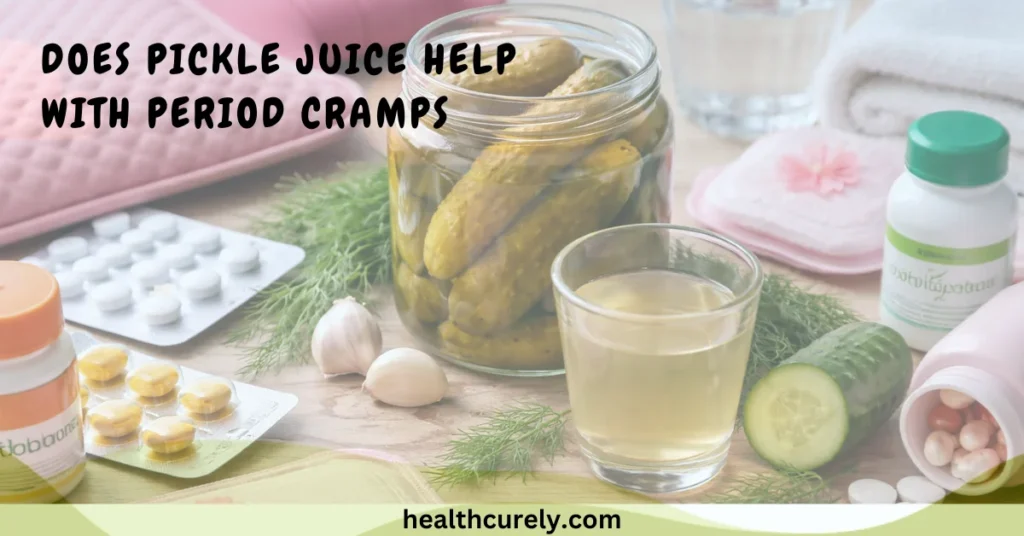

Does pickle juice help with period cramps? Sometimes, but not for the reason most people think. Pickle juice does not directly stop uterine cramps. It may reduce muscle cramping linked to dehydration or electrolyte imbalance, which can overlap with period discomfort for some people.
This matters because confusing the mechanism leads to wasted effort and missed relief. Understanding when pickle juice helps and when it does not puts you back in control.
What Actually Causes Period Cramps
Period cramps begin when the uterus releases prostaglandins to shed its lining. Higher prostaglandin levels cause stronger contractions and more pain.
This pain is not caused by low sodium. It is not caused by a lack of vinegar. It is driven by inflammatory signaling and muscle contraction in the uterus itself.
However, period pain often comes with secondary muscle tension, back pain, leg cramps, headaches, and fatigue. That overlap is where pickle juice enters the conversation.
Why Pickle Juice Sometimes Feels Like It Helps
Pickle juice may reduce discomfort when cramps are linked to dehydration, sodium loss, or muscle tension rather than uterine contractions. Its effects are usually short lived and supportive, not curative.
Sodium And Fluid Balance
Pickle juice is high in sodium. Sodium helps retain fluid and maintain nerve signaling. If you are dehydrated or under hydrated, muscles can cramp more easily.
During periods, fluid shifts, appetite changes, and nausea can reduce intake. In that specific scenario, sodium can help stabilize muscle function.
Nerve Reflex Effects
There is evidence that strong acidic tastes can trigger neural reflexes that reduce muscle cramping temporarily. This effect is fast but short lived.
That does not target the uterus. It targets peripheral muscle cramping and nerve signaling.
Placebo And Timing Effects
Relief that happens shortly after drinking pickle juice often coincides with natural cramp fluctuation. Cramps rise and fall. Timing can create a false sense of causation.
This does not mean the relief is imagined. It means the mechanism is not what people think.
When Pickle Juice Is Most Likely To Help
Pickle juice is most useful in specific scenarios, not as a universal fix.
It may help if:
- You are dehydrated during your period
- You have leg or lower back muscle cramps along with uterine pain
- You are sweating, vomiting, or not eating normally
- You crave salty foods during cramps
- You notice cramps worsen when fluid intake drops
In these cases, pickle juice can reduce supporting muscle tension, which may lower overall discomfort.
When Pickle Juice Will Not Help Much
Pickle juice is unlikely to help if your pain is driven mainly by uterine prostaglandins.
It usually does not help when:
- Cramps are severe and centralized in the lower abdomen
- Pain comes in waves tied to uterine contractions
- You already hydrate well
- There is nausea triggered by strong tastes
- Salt intake is already high
In these cases, relying on pickle juice delays more effective strategies.
What To Do If You Want To Try Pickle Juice
If you choose to try it, do it strategically.
Use one to two ounces, not a full glass. Drink it once, then reassess after twenty minutes. Do not repeat multiple times. Pair it with water. Sodium works best when fluid intake is adequate. Stop if nausea, bloating, or reflux appears. Pickle juice is acidic and can irritate the stomach.
This approach minimizes downside and makes the test meaningful.
What Actually Works Better For Period Cramps
Methods that reduce inflammation and relax the uterus provide more consistent relief than electrolyte fixes. Heat, proper hydration, magnesium, and timely anti inflammatory support address the real cause of menstrual pain.
Anti Inflammatory Action Matters Most
Because prostaglandins drive cramps, approaches that reduce inflammation work best.
Heat therapy relaxes uterine muscle and improves blood flow. This directly targets cramping.
Anti inflammatory medications reduce prostaglandin production. They are consistently more effective than electrolyte strategies.
Magnesium And Muscle Relaxation
Magnesium supports muscle relaxation and nerve function. Unlike sodium, it can influence both uterine and skeletal muscle tension.
For people with frequent cramps, magnesium often outperforms pickle juice.
Consistent Hydration Over Quick Fixes
Hydration throughout the day matters more than a salty shot during pain. Regular fluid intake reduces secondary muscle cramping and fatigue.
Pickle juice is reactive. Hydration is preventive.
Movement And Positioning
Gentle movement increases circulation and reduces muscle guarding. Curling tightly can worsen pain by increasing tension.
Even light walking or stretching often reduces cramp intensity.
Myths That Confuse People About Pickle Juice
Myth one: Pickle juice stops uterine contractions.
Reality: It does not change prostaglandins.
Myth two: Salt cravings mean pickle juice is required.
Reality: Cravings signal need, not the exact source.
Myth three: More pickle juice works better.
Reality: Excess sodium increases bloating and discomfort.
Myth four: If it worked once, it always works.
Reality: Cramps vary cycle to cycle.
Who Should Avoid Using Pickle Juice For Cramps
Pickle juice is not appropriate for everyone.
Avoid it if you have:
- High blood pressure sensitive to sodium
- Severe acid reflux
- Stomach ulcers
- Kidney conditions requiring sodium limits
- Migraines triggered by salty or acidic foods
For these groups, the risk outweighs potential benefit.
What Actually Matters Vs Internet Hacks
The internet favors fast, dramatic fixes. Period cramps respond best to mechanism matched relief.
What matters most:
- Reducing prostaglandins
- Relaxing uterine muscle
- Supporting hydration consistently
- Managing inflammation before pain peaks
Pickle juice only addresses one small piece of the puzzle.
When To Act And When To Move On
Try pickle juice once if your cramps include muscle tension and dehydration signs.
If relief is minimal, do not repeat or escalate. Move to strategies that match uterine physiology.
If cramps interfere with daily life consistently, track patterns and address them proactively rather than reacting each month.
How To Combine Pickle Juice With Smarter Relief
If you use pickle juice, use it as support, not the main plan.
Combine it with:
- Heat therapy
- Adequate hydration
- Balanced meals
- Magnesium support
- Early anti inflammatory use when appropriate
This combination targets both primary and secondary drivers of pain.
When Period Cramps Signal Something Else
If cramps are severe, worsening, or accompanied by heavy bleeding, nausea, or pain outside menstruation, evaluation matters.
Conditions like endometriosis or fibroids require targeted care. No home remedy replaces proper assessment.
The Bottom Line That Actually Helps
Does pickle juice help with period cramps? It can help secondary muscle cramping linked to hydration and sodium balance, but it does not treat the root cause of menstrual cramps.
Use it selectively, not obsessively. Focus first on inflammation control, heat, hydration, and muscle relaxation. That is where real relief comes from.
Disclaimer: The information provided on Health Curely is intended for educational use only and should not replace professional medical advice, diagnosis, or care. For any health-related issues, always seek guidance from a qualified healthcare professional.