
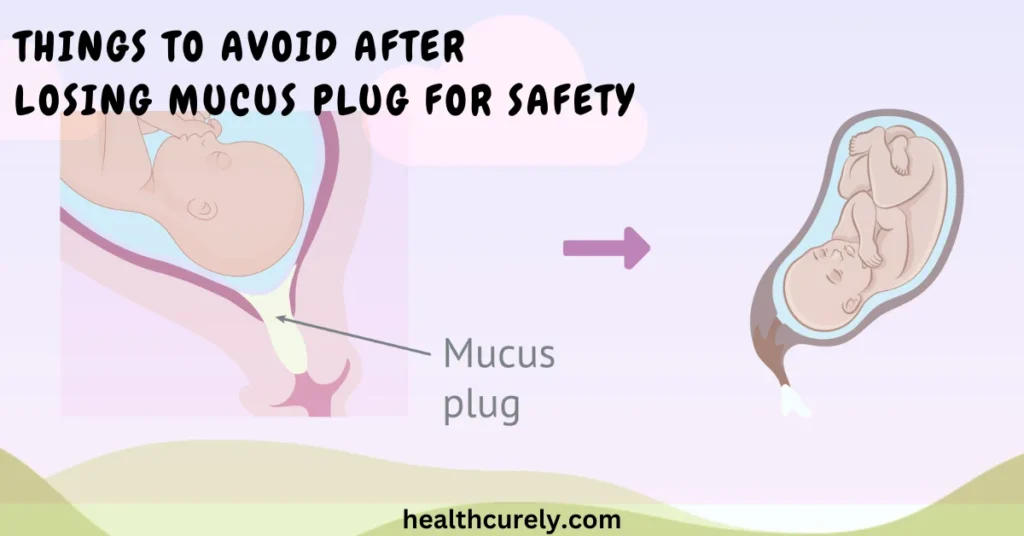

Losing your mucus plug is a sign that your cervix is changing and your body is preparing for labor, but it does not always mean delivery will start immediately. Understanding the things to avoid after losing mucus plug helps reduce infection risk, recognize warning signs, and know when normal activity is still safe.
In most cases, the right approach depends on timing, symptoms, and whether your water has broken. Instead of panic, focus on informed decisions and symptom awareness so you can stay comfortable and prepared.
What Losing The Mucus Plug Means For Your Body
The mucus plug forms inside the cervical canal during pregnancy and acts as a protective barrier between the uterus and outside bacteria. Its job is to help prevent infection while your baby develops.
When the cervix begins softening, thinning, and dilating, the plug may loosen and come out as a thick discharge. This is a normal physiological change and usually indicates that the body is moving closer to labor, although the timing varies widely.
Some people lose it all at once, while others notice increased discharge over several days. Both patterns are considered normal as long as there are no concerning symptoms like heavy bleeding or a foul smell.
The Most Important Rule Before Considering What To Avoid
Before focusing on restrictions, the most critical factor is context. The right precautions depend on gestational age and whether the amniotic membranes are intact.
If mucus plug loss occurs before 37 weeks, it may indicate preterm cervical changes, and contacting a healthcare provider is important. When it happens at full term with no other symptoms, it is usually part of normal labor preparation.
Another key factor is whether your water has broken. If membranes rupture, infection risk increases, and more precautions become necessary. If they remain intact, activity restrictions are often less strict.
Things To Avoid After Losing Mucus Plug
Avoid Inserting Anything Into The Vagina
Once the cervical barrier begins changing, minimizing unnecessary vaginal insertion helps reduce infection risk. This includes tampons, douching, and non-essential internal exams.
The cervix may be slightly more open, so keeping the area free from potential bacteria sources is a simple precaution that supports overall safety.
Avoid Activities That Increase Infection Risk
Hot tubs, poorly maintained pools, and environments with higher bacterial exposure may increase infection chances. Warm water is not inherently harmful, but prolonged exposure in public or unclean settings is best limited.
Maintaining good hygiene and choosing clean bathing environments helps lower unnecessary risk.
Avoid Ignoring Signs Of Early Labor
One of the most important mistakes is assuming mucus plug loss is the only change to watch. Ignoring contractions, pelvic pressure, or fluid leakage can delay recognizing labor onset.
Monitoring symptoms allows timely decisions and reduces anxiety about whether labor has begun.
Avoid Heavy Physical Strain When Symptoms Increase
Normal movement is generally safe, but intense exertion when cramping, fatigue, or pelvic pressure are present may increase discomfort. Listening to your body and adjusting activity helps maintain comfort as labor approaches.
Situations Where Restrictions May Not Be Necessary
In many full term pregnancies, losing the mucus plug alone does not require major lifestyle changes. If you have no contractions, bleeding, or fluid leakage, most daily activities can continue as usual.
Healthcare providers often emphasize individualized guidance because pregnancy experiences vary. Some people continue moderate exercise and normal routines without issues, while others may need more rest depending on symptoms.
Understanding that restrictions are not always universal helps reduce unnecessary stress and allows you to maintain a sense of normalcy.
How To Tell If What You Lost Was The Mucus Plug
The mucus plug typically appears as thick, jelly like discharge that may be clear, white, yellow, or slightly pink. It can be stringy or clumped together and sometimes contains streaks of blood, known as a bloody show.
Normal pregnancy discharge is usually thinner and more consistent, while amniotic fluid tends to be watery and may leak continuously. Distinguishing between these helps determine whether you are experiencing normal cervical changes or membrane rupture.
If fluid leakage continues or you are unsure, contacting a provider can help clarify the situation quickly.
Signs That Require Immediate Medical Attention
While mucus plug loss is usually normal, certain symptoms indicate the need for prompt evaluation.
- Heavy bleeding similar to a menstrual flow
- Sudden gush or continuous leaking of fluid
- Fever or chills
- Strong foul odor from discharge
- Decreased fetal movement
These signs may indicate infection, premature rupture of membranes, or other complications that need medical assessment.
What You Should Do Instead Of Focusing Only On Avoidances
Rather than concentrating only on restrictions, focusing on supportive actions helps you stay prepared and comfortable.
Monitor contraction patterns and note their frequency and intensity. Keep track of any fluid leakage or changes in discharge. Staying hydrated, resting when needed, and maintaining light movement supports circulation and energy levels.
Preparing your hospital bag and discussing a birth plan can also help reduce stress and create a sense of readiness.
Timeline Expectations After Losing The Mucus Plug
Labor timing after mucus plug loss varies significantly. For some people, contractions begin within hours, while others may not go into labor for days or even weeks.
This variation occurs because cervical dilation and hormonal signals progress at different rates. Losing the plug simply indicates that cervical changes are underway, not that delivery is imminent.
Understanding this variability helps set realistic expectations and prevents unnecessary worry if labor does not start right away.
Common Myths About Losing The Mucus Plug
Many misconceptions surround mucus plug loss, which can create confusion.
One common myth is that labor will start immediately, but in reality, the body may still be preparing for days. Another misconception is that the plug must come out all at once, while gradual loss is equally normal.
Some people also believe strict activity restrictions are always necessary, but this depends on individual circumstances and symptoms rather than a universal rule.
Emotional And Psychological Reactions
Noticing physical signs of labor can bring excitement, anxiety, or a mix of both. The uncertainty of timing often leads to heightened anticipation, especially for first time parents.
Managing these emotions involves focusing on preparation rather than prediction. Practicing relaxation techniques, staying informed, and discussing expectations with a provider can help maintain emotional balance.
Feeling prepared can make the transition from pregnancy to labor feel more manageable and less overwhelming.
Quick Decision Checklist
The following table offers a simple way to decide what steps to take after losing the mucus plug.
| Situation | Recommended Action |
|---|---|
| Before 37 weeks | Contact provider |
| Water breaks | Seek evaluation |
| Mild discharge only | Monitor symptoms |
| Heavy bleeding | Seek immediate care |
| Normal movement and no symptoms | Continue routine |
This checklist helps translate information into practical decisions that are easy to follow.
Key Takeaways
IMPORTANT: Losing the mucus plug is a sign of cervical change, not a guaranteed start of labor. Context such as gestational age and symptoms determines what precautions are necessary.
Avoid unnecessary vaginal insertion, reduce infection risk, and monitor for signs of labor or complications. At full term with no additional symptoms, many normal activities remain safe.
Awareness and observation are more valuable than strict limitations, helping you respond appropriately without unnecessary stress.
Conclusion
Understanding the things to avoid after losing mucus plug helps you navigate late pregnancy with confidence and clarity. Instead of focusing solely on restrictions, the key is recognizing symptoms, maintaining hygiene, and knowing when to seek guidance.
For most full term pregnancies, mucus plug loss simply marks progress toward labor rather than an emergency. By balancing awareness with normal daily routines, you can stay comfortable, prepared, and reassured as your body moves closer to delivery.
Clear information and thoughtful observation allow you to make decisions that support both safety and peace of mind during this important stage.
FAQs
Click on a question to reveal the answer
Yes, small portions can pass gradually over time as the cervix continues to change.
Yes, some people notice clear or slightly cloudy mucus without any blood streaks.
If you cannot distinguish between discharge and fluid leakage, it is reasonable to seek reassurance.
It does not directly affect movement, but any noticeable decrease should be evaluated.
Stress does not directly trigger labor timing, but relaxation can help maintain comfort and readiness.
Disclaimer: The information provided on Health Curely is intended for educational use only and should not replace professional medical advice, diagnosis, or care. For any health-related issues, always seek guidance from a qualified healthcare professional.